What Things Are Covered In Phlebotomy Training Courses?
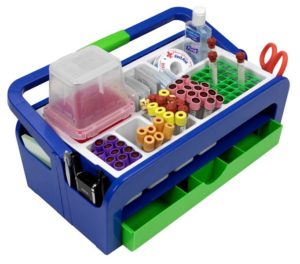 Health care workers who would like to improve their careers might want to consider taking up a phlebotomy training program in preparation for becoming certified professionals. What are the things usually covered in a training program?
In the past, phlebotomy certification was not a requisite for career advancement. It was only a process learned by medical workers on the job. However, as the health care industry began to grow, doctors, nurses, and other medical practitioners had new responsibilities that took away the time they were supposed to allocate for blood testing. This particular procedure was left in the hands of allied health workers, the phlebotomists.
These days, allied health workers take up phlebotomy training in order to enhance their chances of being chosen by prospective employers in health care institutions. It cannot also be denied that those who possess the appropriate certification are usually better compensated as compared to their uncertified colleagues.
In the United States, phlebotomy certification can usually be obtained from any of three major certifying agencies, namely, the National Phlebotomy Association, the American Society for Clinical Pathology, and the Association of Phlebotomy Technicians.
These agencies help aspiring candidates obtain necessary certification. All entities provide specialized training and classroom lessons that help raise an individuals chance of passing the certifying examination for phlebotomy.
Even if these agencies have different training curricula, they all help boost a practitioners knowledge about anatomy and various venipuncture techniques. Furthermore, there are also lessons on people interaction, considering that phlebotomy is an invasive procedure that can make patients feel uncomfortable or even scared.
Undergoing training will require an individual to log in a prescribed number of hours for classroom lessons and for hands-on clinical internship. The number of hours required will vary among the three agencies. Furthermore, the individual working toward a certification will have to accumulate a specified number of unaided bloodletting in order to complete their coursework.
 The requirements to earn phlebotomy certification depend on the type of certification you wish to obtain. Not all states are the what are the requirements to be a phlebotomist are the same, but if you live in a state where there is more than 1 type of phlebotomy certification, then you need to be aware of the requirements for each type. For the purpose of this article, we are using California as our example.
 Where to get your phlebotomy certification depends on the state. Each state has its own governing agency that regulates thewhere to get phlebotomy certification phlebotomy profession. This agency likely regulates other health professions that are similar. It is this agency that approves of training programs and exams. Therefore, before signing up for a class, make sure it is on the approved list.
 Online phlebotomy certification is the answer for busybodies who want to start a career as phlebotomists but are too busy to go to traditional school.
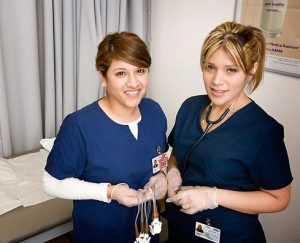 In order to obtain your Phlebotomy certification which then results in the candidate being issued with their Phlebotomy License, an examination has to be written and passed. Whoever conducts this examination, the state you live in or the US government, it is proof that a qualified Phlebotomist will be allowed to practice as a certified Phlebotomist. Not all US states insist in this certification, but in California – they are very strict – no license, no practice, no work.
 In the medical field, phlebotomy is the procedure of blood getting from a patient for analysis, treatment and transfusion. To become a phlebotomist, one needs to go through specialized training and obtain a phlebotomy certification in order to put their knowledge into practice. A certification is a guarantee that a medical practitioner is qualified to practice blood extraction. This certificate will be recognized by laboratories, clinics and hospitals when they employ a competent phlebotomist.
 The act of making an incision in the veins is called Phlebotomy and the person who does the venipuncture job is called a Phlebotomist. They are trained individuals who extract blood aseptically from the veins for diagnostic purposes. They commonly use intravenous catheters, syringes, evacuated collection tubes and other blood collection devices to draw blood in the laboratory, emergency rooms and in the room of patient per doctor’s order. Basically a phlebotomist collects blood specimen to help the doctors in determining the current status of the patient. Being a phlebotomist is a very risky job because they work around bloods and other specimen which makes them more exposed to blood diseases like HIV, AIDS, STD and Hepatitis B. That is why proper training is essential, not just for the patient’s safety but also for the phlebotomist himself.