 Phlebotomy certification is the process by which someone obtains a certificate to practice phlebotomy at a given level (if the statewhat is phlebotomy certification has multiple levels of certification). It is a multi-stage process.
The first stage is having your prerequisites in order. That is, make sure you have completed everything needed to begin a class. This is generally satisfied by earning your high school diploma or an equivalent to a high school diploma such as a GED. If everything is in order, you can register at a phlebotomy training program. The program must be state-approved. Be careful not to waste your money in a class that does not have the backing of your state. Once you complete the second stage it is on to the third, which is passing the exam. If you pass the test move to the final stage, which is the application stage. With valid proof of fulfilling the requirements, including finishing the training class, passing the exam and completing any required experience in punctures on real patients, you will submit your materials to the state’s governing body. If approved, you will receive your certificate.
States have their own requirements for what it takes to earn certification. Be sure understand what those requirements are so that time and money are not wasted. For example, in California, there are 3 main levels of a phlebotomist: Limited Phlebotomy Technician, Certified Phlebotomy Technician I, and Certified Phlebotomy Technician II. Each level has its own set of requirements. If your state has a multi-tiered system like California, know which one you are applying for to meet its respective requirements.
Limited Phlebotomy Technician
The requirements for this level includes the following:
- 20 hours of basic classes
- 25 skin punctures
- Certified Phlebotomy Technician I
This level is broken down into 3 categories: No experience, experience less than 1040 hours, and experience of 1040 hours or more. We will examine the requirements for each.
No Experience
- 20 hours of basic classes
- 20 hours of advanced classes
- 40 hours of practical training
- 50 venipunctures
- 10 skin punctures
Experience less than 1040 hours
- 20 hours of basic classes
- 20 hours of advanced classes
- 50 venipunctures
- 10 skin punctures
Experience of 1040 hours or more
- 20 hours of advanced classes
- 50 venipunctures
- 10 skin punctures
Certified Phlebotomy Technician II
- 20 hours of advanced classes
- 50 venipunctures
- 10 skin punctures
Completion of the training program and the required punctures does not give you automatic certification. You still must apply for the certification after you finish the requirements. Applications are generally available online. Submit the required materials along with the application fee (if there is one) and await for approval. If approved, you will receive your certificate.
 Interested in phlebotomy? You can learn this trade and aquire the necessary skills by joining one of the many accredited phlebotomy training schools. Selecting a phlebotomy school can be quite difficult if you really want genuine and first-class training. You will have a lot of options and there various schools to choose from, but you must be sure to select a program that will serve your purpose best.
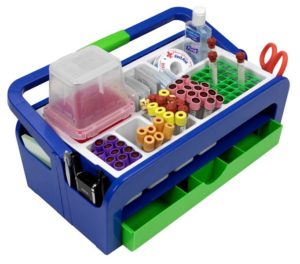 Health care workers who would like to improve their careers might want to consider taking up a phlebotomy training program in preparation for becoming certified professionals. What are the things usually covered in a training program?
 If you plan to work as phlebotomist then there is a high possibility that you may have considered the suitability of online phlebotomy certification. There are so many online phlebotomy training programs which have been designed to assist interested persons obtain certification without walking into a classroom. Such programs are suitable for people who cannot balance between work and study or those who cannot access land based classes with ease.
 The requirements to earn phlebotomy certification depend on the type of certification you wish to obtain. Not all states are the what are the requirements to be a phlebotomist are the same, but if you live in a state where there is more than 1 type of phlebotomy certification, then you need to be aware of the requirements for each type. For the purpose of this article, we are using California as our example.
 Where to get your phlebotomy certification depends on the state. Each state has its own governing agency that regulates thewhere to get phlebotomy certification phlebotomy profession. This agency likely regulates other health professions that are similar. It is this agency that approves of training programs and exams. Therefore, before signing up for a class, make sure it is on the approved list.
 With a great requirement for phlebotomists and training for phlebotomy being relatively short, there is a high demand for careers in phlebotomy. Phlebotomy is a vital part of today’s extremely modern and vast medical field. In a medical team, phlebotomist is important as a doctor. To become a phlebotomy, you have to pass phlebotomy certification exam. Basically, phlebotomists are specialized member of medical unit, whose focus in the section of collection and preservation of blood specimens for diagnostic uses. They sanitize all the required equipments like syringe before used to collect blood and safely dispose all the items after the entire procedure.
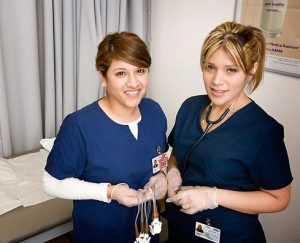 In order to obtain your Phlebotomy certification which then results in the candidate being issued with their Phlebotomy License, an examination has to be written and passed. Whoever conducts this examination, the state you live in or the US government, it is proof that a qualified Phlebotomist will be allowed to practice as a certified Phlebotomist. Not all US states insist in this certification, but in California – they are very strict – no license, no practice, no work.
 In the medical field, phlebotomy is the procedure of blood getting from a patient for analysis, treatment and transfusion. To become a phlebotomist, one needs to go through specialized training and obtain a phlebotomy certification in order to put their knowledge into practice. A certification is a guarantee that a medical practitioner is qualified to practice blood extraction. This certificate will be recognized by laboratories, clinics and hospitals when they employ a competent phlebotomist.
 Phlebotomy Training